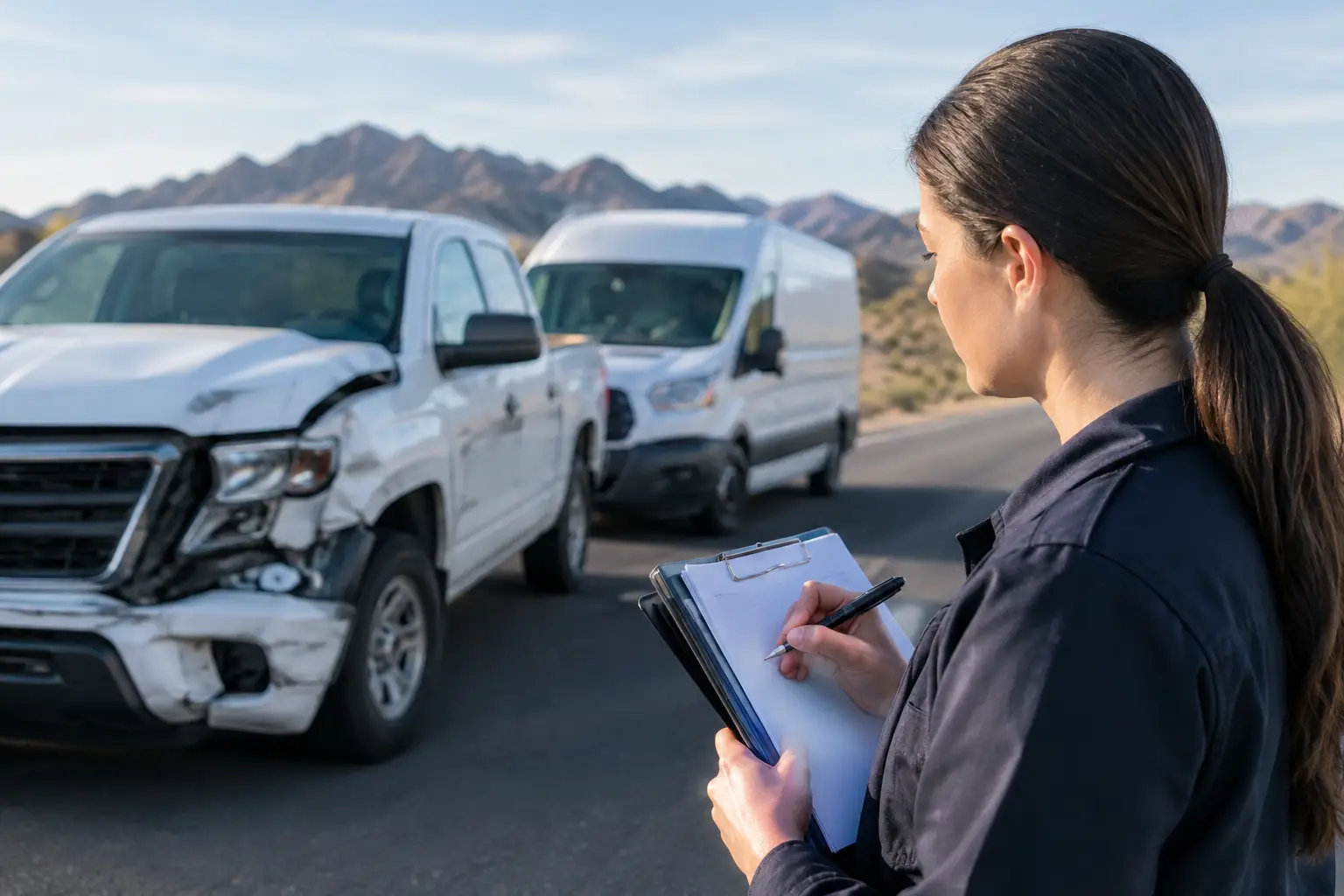
How to Get a Fleet Vehicle Crash Report in Arizona

When your company needs a fleet vehicle crash report in Arizona, speed matters, but accuracy matters more. A single collision can trigger an insurance claim, vehicle downtime, a driver review, customer communications, and possible legal follow-up. The official crash report gives fleet managers and their representatives a consistent record to begin handling those issues.
Why a Fleet Crash Report Matters
A fleet collision creates more than a repair bill. Whether the vehicle is a delivery van, utility truck, service car, passenger shuttle, or leased work vehicle, the report may be needed by several people at once. The driver needs to document what occurred. The fleet administrator needs to arrange repairs and preserve internal records. The insurer needs facts to evaluate coverage and damage. If injuries or disputed facts are involved, attorneys and investigators may also need the same official document.
An Arizona crash report generally captures information recorded by the responding law enforcement agency. Depending on the incident, it may identify the drivers and vehicles involved, location, date and time, roadway conditions, apparent damage, witness information, narrative details, diagrams, and contributing circumstances. The exact information can vary by agency and collision.
For a fleet, that record helps establish a reliable starting point. Internal incident notes, telematics data, dash camera footage, and driver statements can add useful context, but they do not replace the official law enforcement record when an insurer, attorney, or government entity requests it.
What to Collect Before Searching for the Report
The most efficient search begins with the details available at the scene. Fleet managers should ask the driver to provide the information as soon as it is safe and practical. Delays can create avoidable problems, especially when a business operates multiple vehicles or drivers work across different routes.
Have the following details available when possible:
The collision date and approximate time
The city, roadway, intersection, or mile marker where it occurred
The law enforcement agency that responded
The report number or incident number, if provided
The fleet vehicle's license plate number or VIN
The driver's full name and license information
The names of other drivers or involved parties
The report number is often the fastest way to locate the correct record. If it is unavailable, the date, location, driver name, and vehicle information can help narrow a search. Do not assume that an incident number from a towing company, insurer, or internal fleet system is the same as the police report number. Keep those identifiers together, but treat them as separate records unless they clearly match.
Confirm Which Agency Investigated the Crash
Arizona crash reports are typically associated with the agency that responded to or investigated the collision. That may be a city police department, county sheriff's office, state law enforcement agency, or another authorized agency. A crash on a highway may be handled differently than one on a local street, even when both occur within the same metro area.
This detail is especially relevant for fleets that operate statewide. A Phoenix-based company may have drivers involved in collisions in Tucson, Flagstaff, rural counties, or along interstate routes. The vehicle's home location does not determine which agency created the report. The responding agency does.
When a Crash Report Becomes Available
A report is not always available immediately after a collision. The responding officer may need time to complete and submit the report, and the agency may need additional time to process it for release. A serious crash, one involving injuries, commercial vehicles, multiple parties, or a continuing investigation may require more time than a straightforward property-damage collision.
For fleet administrators, the practical approach is to begin the internal documentation process right away and check report availability once the initial processing period has passed. Avoid building a claim file around assumptions that the report will be available on the same day.
If the record is not yet available, preserve the details needed to search again. Record the agency name, incident number, date, driver name, and location in the fleet file. That prevents the common problem of having to contact a driver days later because the original paperwork was misplaced or incomplete.
How to Use a Fleet Vehicle Crash Report in Arizona
Once retrieved, the report should be reviewed promptly by the person responsible for claims, safety, or fleet operations. Start by confirming basic facts: the correct vehicle, driver, date, location, and incident number. An incorrect vehicle plate, misspelled name, or wrong crash date can cause claim delays if it goes unnoticed.
The report can then support several operational needs. For insurance, it gives the adjuster an official source for the reported facts, involved parties, and agency findings. For repair authorization, it helps connect damage estimates and towing records to the right event. For internal safety review, it can be compared with route data, telematics, camera footage, and the driver's post-crash statement.
A report may also be relevant when a customer, third party, or employee raises questions about responsibility. However, a crash report should not be treated as the only answer to every liability question. Insurance carriers, attorneys, and courts may evaluate additional evidence. The report is a key record, not a substitute for a complete investigation when one is necessary.
Separate Fact Review From Driver Discipline
Fleet managers should be careful not to make an immediate disciplinary decision based only on an initial description of the crash. A report can contain valuable observations, but a fair internal review may also require driver input, dispatch records, safety policies, camera footage, maintenance history, and telematics data.
This is particularly true in commercial operations where the vehicle's size, load, route requirements, backing procedures, or customer-site conditions may be relevant. A company can address urgent safety concerns right away while still allowing time for a complete review of the available documentation.
Build a Complete Collision File
The official report should sit within a larger, organized collision file. This keeps claims moving and makes it easier to respond if the matter is reviewed months later. Store the report with the driver's statement, photographs, towing and repair documents, insurance claim number, witness contact information, and any available video or telematics records.
Use a consistent file name or incident identifier across departments. If the safety manager, insurer, repair vendor, and legal team each refer to the event differently, records can become difficult to reconcile. A simple standard using the crash date, unit number, and report number can reduce confusion.
Access should also be limited to people with a legitimate business need. Crash reports may contain personal information about drivers, passengers, witnesses, and other involved parties. Fleet administrators should follow their organization's privacy, retention, and records-management procedures when sharing or storing documents.
Common Delays and How to Avoid Them
Most report retrieval problems come down to missing details, incorrect agency information, or searching too soon. A driver may remember the city but not the roadway. A manager may know the unit number but not which agency responded. In other cases, the company has a report number with one transposed digit.
The best prevention is a clear post-crash procedure. Drivers should know to report the incident internally, obtain the responding agency's information when available, photograph documents provided at the scene, and send those details to the designated fleet contact. They should not be asked to debate fault with other parties or rely on memory after a stressful event.
For companies with frequent vehicle use, a short collision packet in every vehicle can help. It should tell drivers whom to call, what information to collect, and where to send photographs and documents. The goal is not to create extra paperwork at the roadside. It is to preserve the few details that make report retrieval and claims handling more accurate later.
Retrieve the Record Without Adding Friction
A fleet vehicle crash report in Arizona is most useful when the correct document reaches the right person quickly. Search using the strongest available identifiers, verify the agency and incident details, and review the report before sending it to an insurer or adding it to an internal file. AZCrash can provide a focused online path for locating crash records when you need official documentation without an unnecessary administrative runaround.
A well-managed crash file gives your team room to respond calmly: repair the vehicle, support the driver, answer the insurer's questions, and keep the business moving.


Comments