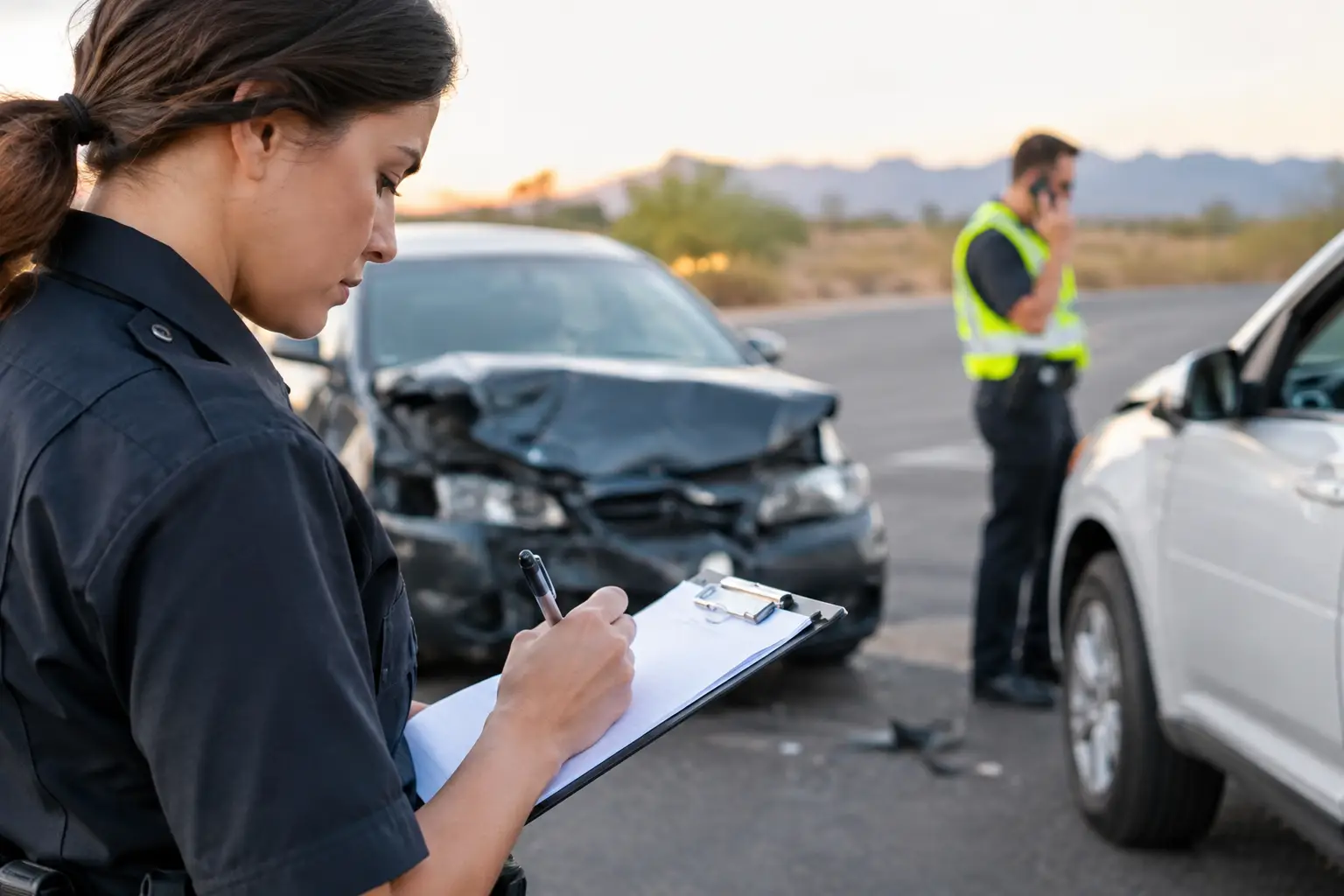
Arizona DUI Accident Report Steps After a Crash

A collision involving suspected impairment creates two urgent tracks: handling the damage and preserving the record. An Arizona DUI accident report can help establish the basic facts of the crash for an insurer, attorney, vehicle owner, or family member. But it is not always a single document, and it may not be available immediately after the incident.
The most effective next step is to identify the investigating agency, gather the right crash details, and request the record through the appropriate process. That approach prevents delays when a claim deadline, repair decision, or legal matter is already moving forward.
What an Arizona DUI accident report can tell you
A law enforcement crash report generally documents the collision itself. It may identify the date, time, location, involved vehicles, drivers, passengers, apparent damage, injuries reported at the scene, witness information, roadway conditions, and the officer's initial description of what occurred.
When impairment was suspected, the report may also indicate that a DUI investigation occurred, that a driver was arrested or cited, or that chemical testing was requested. Depending on the agency and the circumstances, those details may appear in the crash report, a narrative supplement, an arrest report, a citation, or another related law enforcement record.
That distinction matters. A crash report is primarily a record of the collision investigation. It is not a court finding, and a notation about suspected impairment does not by itself establish criminal guilt or civil liability. The final outcome can depend on evidence not included in the report, including test results, supplemental investigation, insurance findings, and court proceedings.
For practical purposes, the crash report is still often the document that gets an insurance claim or legal review started. It gives all parties a common reference point for the event and helps confirm that the reported collision matches the agency record.
Finding an Arizona DUI accident report
Start with the agency that investigated the collision. In Arizona, that might be a city police department, county sheriff's office, Arizona Department of Public Safety, tribal law enforcement agency, or another responding authority. The agency name may appear on an exchange-of-information sheet, citation, tow paperwork, insurance correspondence, or paperwork provided at the scene.
Before searching, collect as many identifiers as possible. The exact information required varies by agency, but having several details improves the likelihood of a successful match:
The crash date and approximate time
The city, roadway, intersection, or mile marker
A driver's full name and date of birth, when available
The report number, case number, or citation number
A vehicle license plate number or VIN
A report number is usually the fastest search method. If you do not have one, the crash date, location, and involved party information can often help narrow the search. Enter names carefully. A spelling difference, a hyphenated last name, or a report filed under another driver's name can affect results.
AZCrash is designed to provide a focused digital path for locating eligible Arizona crash records. Availability depends on the reporting agency, how the record was submitted, and whether the report is ready for release. If a search does not return a report immediately, it may still be in processing rather than missing.
Allow time for the report to be completed
Officers must finish and submit crash documentation before it can be released. A straightforward property-damage collision may be processed relatively quickly, while a crash involving suspected DUI, serious injury, a fatality, multiple vehicles, reconstruction, or an active criminal investigation can take longer.
Do not assume the lack of an immediate result means no report exists. The officer may have submitted preliminary information while a supervisor review, supplemental narrative, or records processing remains pending. Agency procedures and release timing are not identical across Arizona.
If you need the record for an insurance claim, notify the insurer that law enforcement investigated the crash and provide the report number or agency details you have. This lets the claim move forward while the formal report is being processed. For urgent repair, towing, medical-payment, or rental questions, the insurer may be able to use other documentation temporarily.
Review the report for accuracy and relevance
Once you receive the report, check it against the information you know from the crash. Focus first on core identifiers: the crash date and location, involved vehicles, license plates, driver names, insurance information, and report number. These details are often needed for claims, repair records, and later correspondence.
Then review the narrative, diagram, listed contributing factors, witness references, injuries noted at the scene, citations, and any indication of a DUI investigation. Read the report as an officer's record of the scene, not as a complete account of every fact that may matter later. A report may not include subsequent medical diagnoses, all vehicle damage, every conversation between drivers, or evidence developed after the initial response.
If you see a factual error, contact the reporting agency and ask about its correction or supplemental-report procedure. Agencies may be able to document certain clerical corrections, but they may not alter an officer's observations simply because an involved party disagrees with the account. Keep copies of supporting material, such as photos, repair estimates, witness contact information, and medical records, in case they are needed.
Using the report for insurance and legal follow-up
For an insurance claim, provide the report to the adjuster along with the claim number and any requested supporting documents. The report can help identify the parties, insurers, vehicle information, and initial circumstances of the collision. It does not automatically determine fault, coverage, or payment. Insurers conduct their own reviews, and coverage decisions may depend on policy terms and additional evidence.
For a personal injury or property-damage dispute, preserve the exact version of the report you received. Save it as a PDF or printed copy, record the date obtained, and avoid marking up the only copy. If a later supplemental report becomes available, keep that separately rather than replacing the original without a record.
An attorney may request additional materials when injuries are significant, liability is disputed, or a criminal DUI case is pending. Those materials can include citations, body-camera records, dispatch logs, photographs, toxicology-related evidence, witness statements, or court filings. Access rules, redactions, fees, and release schedules can differ for each record type.
Keep expectations realistic when a DUI case is involved
A DUI-related collision can create understandable pressure to obtain every record immediately. Still, criminal investigation records may have different release rules than the crash report. Some information can be withheld, redacted, delayed, or available only through a separate request process while an investigation or prosecution is active.
It also helps to separate the insurance timeline from the criminal case timeline. A claim may require attention right away, while a DUI charge can take much longer to resolve. Do not wait for a court outcome before reporting the crash, documenting losses, or meeting insurance deadlines.
If you were injured, seek appropriate medical care and retain records of treatment, expenses, missed work, and communications with insurers. If you are a family member acting for an injured person, confirm what authorization or documentation is needed before requesting records or discussing the claim. Privacy rules and agency procedures can affect who may receive certain documents.
A clear report search is often the first administrative task after a DUI-related crash, but it should support a broader recordkeeping habit. Keep the report number, agency name, claim number, photos, correspondence, and receipts together. When the next call comes from an insurer, repair shop, attorney, or investigator, you will have the details needed to respond accurately and without starting the process over.


Comments